Classical Mythology Eigth Edition Definition
.Classical Myth, 8th Edition. DescriptionFor courses in Classical Mythology in Classics, English, or other departments.Comprehensive and scholarly, this well-designed and class-tested text presents Greek and Roman myths in a lively and easy-to-read manner. It features fresh translations, numerous illustrations (ancient and modern) of classical myths and legends, and commentary that emphasizes the anthropological, historical, religious, sociological, and economic contexts in which the myths were told. It also provides a cultural context so that students can see how mythology has influenced the world and how it continues to influence society today. “Perspective” boxes—Highlight the postclassical influence of classical myth and provide students with a cultural context for mythology. Emphasizes the continuing influence of classical myth in Western culture.
Helps students see how stories and figures from classical myth were appropriated and interpreted at later stages of history. Ancient illustrations—Featured along with over 200 black and white pictures and over a dozen color modern representations.
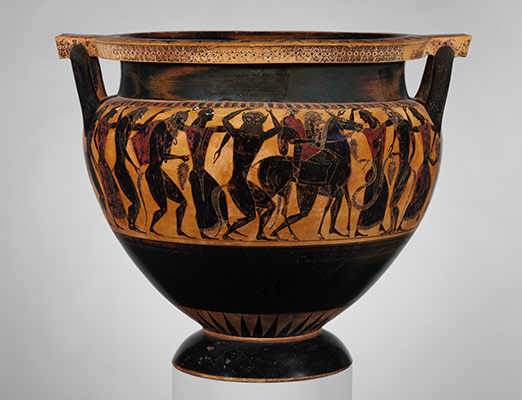
Shows students how artists have visualized mythological issues and events. A section at the end of each chapter—Gives specific ancient sources for classical myth, in addition to those that appear earlier in the chapter. Enables students to discover unfamiliar versions of classic myths and do original research on classic myths. Lucid introductory material—Explains the historical, sociological, archaeological, and interpretive background in which the myths were told. Gives students the complete picture of why myths were created and passed on. 'Observation' section on the Trojan War discusses the new excavations at Troy and provides some background on Heinrich Schliemann's alleged discovery of Priam's citadel at Hisarlik, bridging the gap between Homeric epic and archaeological discovery and commenting on the historicity of the Trojan War.
A Perspective on Seamus Heaney, citing his poem on the suicide of Ajax, appears in Chapter 21, 'The Fall of Troy and Its Aftermath. Two Chapters on Roman myth. The first chapter focuses on the Aeneid to make the presentation of this epic more consistent with Powell's earlier treatment of the Iliad and the Odyssey. The second chapter explains Roman myth and legend in light of earlier information about the Greeks and the Near East. Both chapters include discussion of divine myth, legend, and folktale to fully embrace Rome within the book's hallmark approach to myth. Greater integration of Greek and Roman myth is also achieved by the new back-to-back treatment of nostoi ('homecomings') of the Greek hero Odysseus and the Roman hero Aeneas. Each chapter includes illustrations.
Intermediate Accounting Eighth Edition
More concise and easier-to-use table of contents. Completely revised and expanded bibliographies of modern works and end of chapter resources. Gives students the latest bibliographical information so that they may do additional research on the topics that interest them. A guide to Spelling and Pronunciation at the end of Chapter 1. Table of ContentsPrefacePart IDefinitions and Background1. The Nature of Myth2. The Cultural Context of Classical Myth3.

The Development of Classical MythPart IIDivine Myth4. Myths of Creation I: The Rise of Zeus5.
Myths of Creation II: The Origins of Mortals6. Myths of Zeus, His Wife Hera, and His Brothers Poseidon and Hades7. Myths of the Great God Apollo8. Myths of Hermes, Pan, Hephaestus, and Ares9.
Myths of the Female Deities Aphrodite, Artemis, and Athena10. Myths of Fertility I: Demeter and Related Myths11. Myths of Fertility II: Dionysus12. Myths of Death: Encounters with the UnderworldPart IIILegends13. Introduction to Heroic Myth: The Mesopotamian Legend of Gilgamesh14.
Perseus and Myths of the Argive Plain15. Theseus and the Myths of Athens17. The Myths of Crete18. Oedipus and the Myths of Thebes19. Jason and the Myths of Iolcus and Calydon20. The Trojan War21. The Fall of Troy and Its Aftermath22.
The Return of OdysseusPart IVRoman Myth23. Legends of Aeneas24. Legends of Early RomePart VInterpretation25. Theories of Myth InterpretationReference ChartsChronology of the Ancient WorldThe Greek and Roman PantheonCreditsIndex and Pronunciation Glossary. About the Author(s)Barry B.
Powell, after graduation from Berkeley and Harvard, taught at Northern Arizona University, then took a job at the University of Wisconsin-Madison, where he taught for 34 years. He is a master of many languages, both ancient and modern, and for many years taught Egyptian philology and culture at Wisconsin, in addition to courses in Classics. His book Homer and the Origin of the Greek Alphabet, which advanced the thesis that one man invented the Greek alphabet in order to record the poet Homer, has become a classic and changed the way we think about the origins of Western Culture. He has written many other books, including two novels and a book of poetry. His book Classical Myth, is the best-selling book on the topic, and is now in its eighth edition. His book Homer is the best-selling study of this author.
The Greeks: History, Culture, and Society (second edition, with Ian Morris) is widely used in college classrooms. He is currently preparing a translation of the Iliad and the Odyssey. He lives in Santa Fe, New Mexico, where he and his wife Patricia enjoy the company of their children and grandchildren.